
The global surge in artificial intelligence and rapid digitalization is pushing modern power grids to their absolute limits. To address this, Infineon Technologies AG and DG Matrix have announced a strategic partnership aimed at redefining power conversion. By leveraging cutting-edge Solid-State Transformer Technology, the collaboration seeks to enhance the efficiency, reliability, and density of power systems connecting AI data centers and industrial applications to the public grid.
A Strategic Shift to Silicon Carbide (SiC)
At the heart of this partnership is the integration of Infineon’s latest-generation Silicon Carbide (SiC) semiconductors into DG Matrix’s Interport™ multi-port solid-state transformer platform. This move isn’t just about sourcing components; it is a calculated effort to fortify the semiconductor supply chain while pushing the boundaries of what SST systems can achieve on a global scale.
Andreas Weisl, Executive Vice President at Infineon, emphasized that AI data centers demand “uncompromising reliability.” He noted that Infineon’s SiC power semiconductors are the primary enablers for this next level of performance, allowing DG Matrix to deliver scalable, high-performance infrastructure.
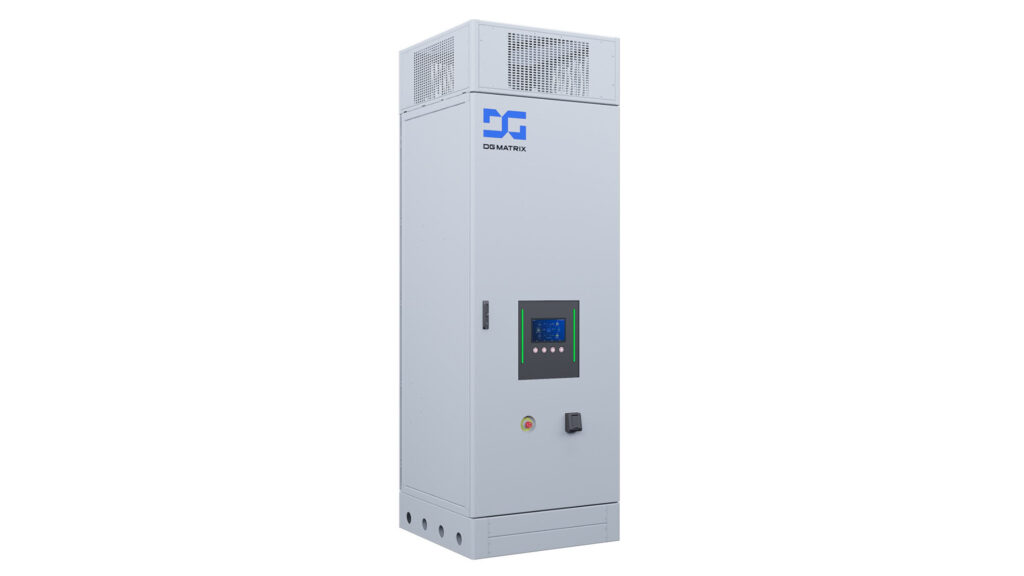
Why Solid-State Transformer Technology Matters
Conventional transformers, built on copper and iron, have served the grid for over a century. However, they are bulky, heavy, and lack the “smart” capabilities required for modern electrification. Solid-State Transformer Technology represents a semiconductor-based evolution that offers:
- Compact Footprint: SSTs are up to 14 times smaller than traditional transformers.
- Lightweight Design: They are approximately 40 times lighter, making them easier to deploy in urban or space-constrained environments.
- Active Control: Unlike passive traditional units, SSTs actively control voltage, power quality, and energy flow.
- Direct Conversion: They enable seamless power conversion from medium-voltage grid levels directly to the low voltages required by AI chips, EV chargers, and renewable microgrids.
Bridging the Gap for AI and Electrification
As AI models become more complex, the power density required within data centers skyrockets. DG Matrix CEO Haroon Inam highlighted that their multi-port architecture was specifically designed to maximize the performance envelope of Silicon Carbide. By using Infineon’s SiC devices, the Interport platforms achieve higher efficiency and better thermal management—critical factors for 24/7 industrial operations.
Market Outlook: A Billion-Dollar Opportunity
The transition to semiconductor-based power infrastructure is not just a trend; it is a massive market shift. Infineon projects that the global semiconductor market volume for Solid-State Transformer Technology could reach $1 billion within the next five years.
This growth is fueled by the need for smarter, more resilient grids that can handle the intermittent nature of renewable energy and the massive, localized loads of EV charging hubs.
The Road Ahead for Infineon and DG Matrix
Looking forward, both companies plan to align their roadmaps for next-generation SiC devices. As DG Matrix scales toward higher-voltage platforms and larger production volumes, the integration of Infineon’s technology will expand across the entire Interport product family. This partnership ensures that as the world moves toward a decarbonized and digitalized future, the underlying power infrastructure is ready to support it.