
The AI-human partnership in cybersecurity is no longer just a futuristic concept; it is an absolute necessity in today’s rapidly evolving digital landscape. As cyber threats multiply in sophistication and scale, the foundational structures of traditional security platforms are buckling under the pressure. Today’s intricate threat environments demand innovative solutions that leapfrog the legacy approaches we once relied on. To grasp why this monumental shift is happening, we must first look at the limitations of older architectures.
Moving Beyond Legacy Security Architectures
Historically, security platforms were designed for a much simpler world. Their architecture, underlying data models, and baked-in assumptions operated on the premise that threats could be identified by matchable signatures. Alert volumes were manageable enough for a small team to monitor via a dashboard, the network perimeter was a physical reality, and reporting usually took place only after an incident had occurred. Ultimately, the system’s primary job was simply to collect data, leaving the heavy lifting of acting upon it entirely to humans.
Today, none of those legacy assumptions hold true. Trying to bolt artificial intelligence onto an outdated security framework is as ineffective as trying to tape a modern GPS device to an old paper map. It might look impressive on the surface, but it applies the right technology to the wrong foundation.
The Anatomy of an AI-Era Security Platform
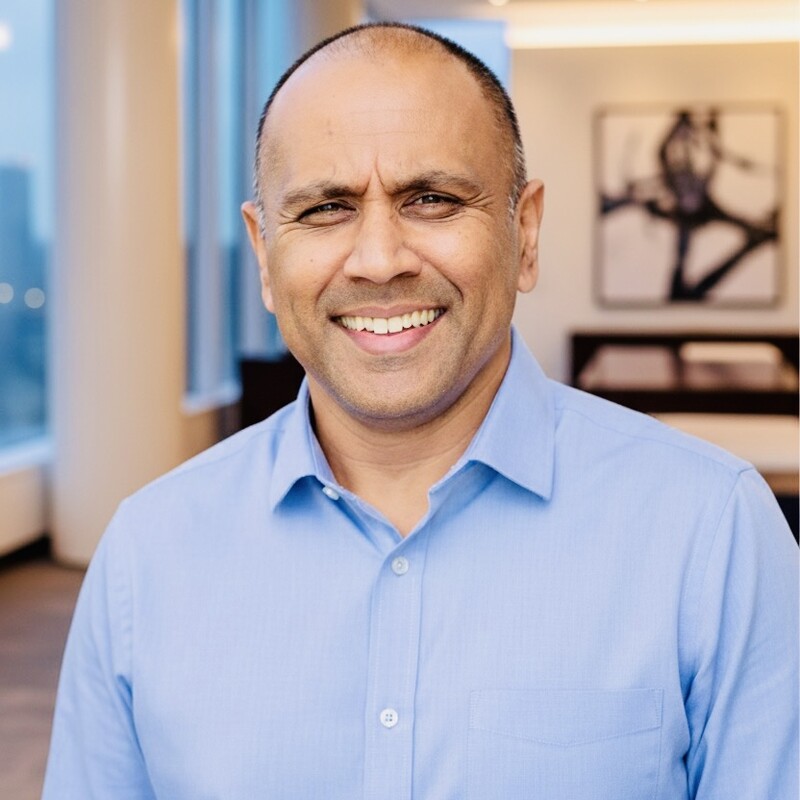
According to insights from Chandrodaya Prasad, Chief Product Officer at SonicWall, an architecture built specifically for the AI era looks fundamentally different from its predecessors. Here is a comprehensive look at how modern platforms operate:
- Presenting Evidence-Based Conclusions, Not Raw Data: Legacy systems overwhelm security teams by dumping massive logs of raw data, leaving analysts to sift through the noise to find the actual threat. A modern, AI-driven platform flips this dynamic. It processes the raw data autonomously and presents the analyst with a finalized conclusion backed by clear, verifiable evidence. This dramatically reduces triage time and accelerates incident response.
- Continuous, Cross-Signal Correlation: In the past, correlation was a manual task or ran on a delayed schedule. Today’s intelligent platforms treat correlation as their core heartbeat. They continuously analyze every single telemetry signal across endpoints, clouds, and networks in real-time, instantly identifying complex attack chains that would be impossible for a human to spot manually.
- Establishing Hyper-Specific Behavioral Baselines: Generic, out-of-the-box rulesets generate massive amounts of false positives. True AI platforms utilize machine learning to understand what “normal” looks like for your specific, unique IT environment. By learning the daily rhythms of your organization’s network traffic and user behavior, the AI can flag genuine anomalies with pinpoint accuracy.
- Elevating the Analyst to Decision-Maker: Instead of forcing the human analyst to act as a human calculator—processing data, formatting logs, and connecting IPs—the AI takes over the mundane computational work. This empowers the human analyst to step into their rightful role: the ultimate strategic decision-maker who uses context and judgment to finalize the response.
Three Strategic Pillars for Modern Cybersecurity
By evaluating decades of architectural decisions, industry leaders like SonicWall have identified exactly what needs to evolve to make this AI-human partnership in cybersecurity a reality:
1. Data is the Hardest Part
Artificial intelligence is only as powerful as the breadth, quality, and recency of the data it consumes. Many security vendors are sitting on siloed, inconsistent telemetry that was never meant to feed advanced machine learning models. Perfecting the underlying data architecture is the unglamorous, yet absolutely critical, prerequisite that makes proactive AI possible.
2. The Market is Ready and Waiting
Managed Service Providers (MSPs) and Managed Security Service Providers (MSSPs) do not need to be convinced about the value of AI. They have been battling the analyst capacity shortage for years. What they desperately need is AI that genuinely works at scale without requiring an in-house team of data scientists to configure it.
3. Trust is the Ultimate Product
When an AI system alerts an analyst to a threat, the analyst must understand why. This is not just for auditing purposes; human judgment is the last line of defense. A “black box” algorithm that is correct 95% of the time will still be abandoned the moment it makes an inexplicable error. Explainable AI is the bedrock of human-AI collaboration.
Critical Questions for Security Leaders
While almost every vendor today claims to feature artificial intelligence, true signal can only be found by asking three hard questions:
- Was this platform’s underlying data architecture originally built to feed AI, or was AI awkwardly retrofitted to work around an aging database?
- Does the AI actively reduce alert volume and highlight genuine threats, or does it simply generate a new layer of AI-created noise?
- Does this platform empower your analysts to make faster decisions, or does it ask them to blindly trust an algorithm they cannot interpret?
The answers to these questions will separate the platforms that dominate the next decade from those that spend it defending their obsolescence.
Will AI Replace the Security Analyst?
We are entering the Age of Collaborative Intelligence. Many assume that AI will inevitably replace human security analysts, but the reality is far more nuanced. While AI excels at automating threat detection and combating alert fatigue, its true superpower is augmenting human expertise.
Products from industry giants process monumental data sets and identify hidden patterns. Yet, analysts remain indispensable for providing business context and managing high-stakes situations. Independent reports consistently stress that merging AI computation with human judgment delivers the most robust security posture possible.
The security analyst is the one who understands that a 2 AM alert isn’t a false positive, but the final step in a dormant, six-week-old attack pattern. They know the historical context of a flagged IP address, and they know what a CFO’s “normal” login behavior looks like while traveling. That contextual, relationship-based intelligence lives in people, not datasets.
What AI can do is absorb the exhaustive, tedious tasks—triaging thousands of low-fidelity alerts, correlating disparate systems, and writing midnight incident reports. By taking over the busywork, AI operates faster and with infinite patience, freeing human analysts to do the work that actually requires intuition and judgment.
The honest truth? The human analyst remains indispensable. As we navigate the future of digital defense, organizations that embrace the AI-human partnership in cybersecurity—treating AI as the ultimate first responder and humans as the ultimate authority—will be the ones that thrive.
About SonicWall SonicWall delivers Boundless Cybersecurity for the hyper-distributed era. Operating in a reality where workforces are remote, mobile, and often unsecured, SonicWall safeguards organizations by stopping the most evasive cyberattacks across boundless exposure points. By providing real-time visibility and enabling breakthrough economics, SonicWall closes the cybersecurity business gap for enterprises, governments, and SMBs worldwide.