
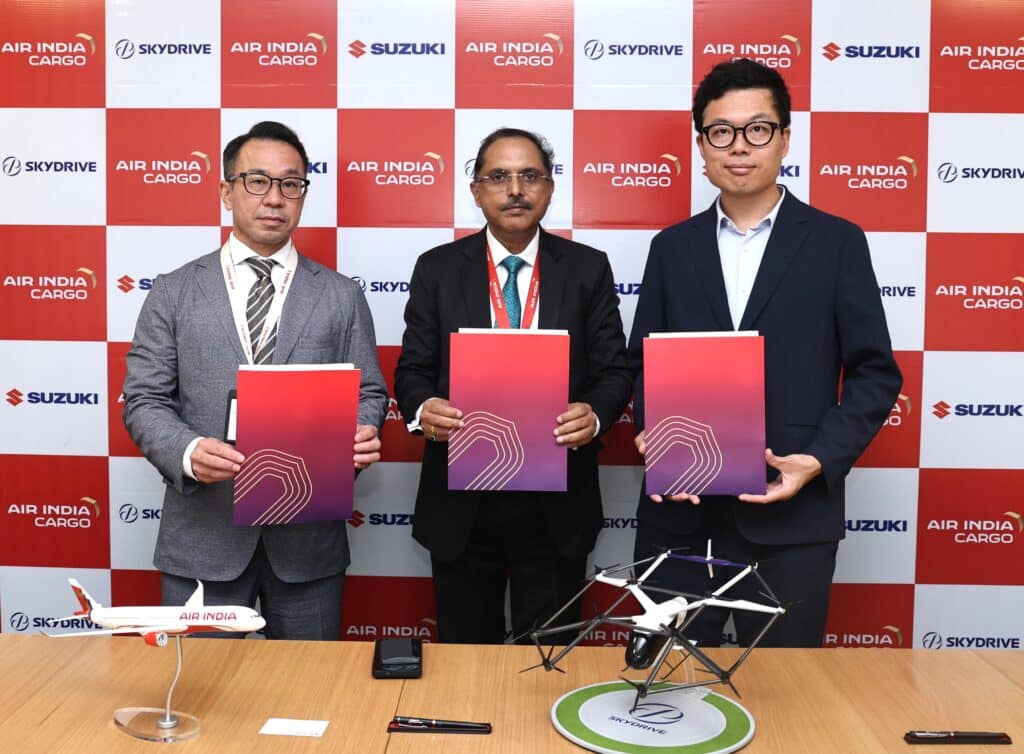
eVTOL medical logistics India is set to revolutionize the country’s healthcare infrastructure through a groundbreaking collaboration announced on July 31, 2026. Air India Limited, SkyDrive Inc., and Suzuki Motor Corporation have signed a comprehensive Memorandum of Understanding (MoU) to conduct a joint feasibility study exploring the use of electric Vertical Take-Off and Landing (eVTOL) aircraft for medical air logistics across India’s congested urban centers.
Addressing Critical Healthcare Challenges Through Innovation
India’s metropolitan cities face unprecedented traffic congestion, creating severe bottlenecks for time-sensitive medical deliveries. This tripartite partnership aims to tackle these challenges head-on by combining cutting-edge aerial mobility technology with operational excellence and deep market understanding. The initiative represents a significant leap forward in India’s quest to modernize its medical supply chain infrastructure.
The collaboration brings together three industry leaders, each contributing unique expertise. SkyDrive provides advanced eVTOL aircraft technology, Air India offers extensive operational knowledge and airport infrastructure expertise, while Suzuki contributes valuable insights into the Indian market and mobility solutions. Together, they aim to develop a framework for safe, reliable, and scalable eVTOL operations specifically designed for last-mile emergency medical logistics.
Strategic Vision for Advanced Air Mobility
Ramesh Mamidala, Head of Cargo at Air India Limited, emphasized the strategic importance of this initiative. He noted that India stands as one of the world’s largest and fastest-growing aviation markets, making advanced air mobility a natural extension of the country’s evolving transport ecosystem. The partnership reflects a shared ambition to explore twenty-first-century solutions that address real-world challenges while shaping the future of mobility.
The potential application of eVTOL aircraft for medical air logistics proves particularly compelling because it combines technology with purpose. By reducing critical transit times when every minute can make a difference between life and death, this initiative demonstrates how innovation can serve humanity’s most pressing needs. Air India contributes operational expertise, airport infrastructure knowledge, and stakeholder relationships to help evaluate and develop comprehensive frameworks for implementation.
Technology Meets Humanitarian Purpose
Tomohiro Fukuzawa, Founder and CEO of SkyDrive Inc., expressed pride in partnering with Air India and Suzuki to advance medical logistics—a sector where every second counts and lives can be saved. Since its founding, SkyDrive has dedicated itself to transforming the future of transportation through aerial mobility revolution. The company recognizes that India’s chronic congestion issues create an ideal environment for demonstrating eVTOL capabilities in advanced medical logistics.
The transport of high-value, time-critical medical supplies—including organs for transplantation, emergency medications, blood products, and diagnostic samples—requires speed and reliability that traditional ground transportation cannot consistently provide in congested urban areas. SkyDrive’s commitment to contributing to saving as many lives as possible drives this ambitious project forward.
Suzuki’s Philosophy of Efficient Mobility
Masao Fujitani, Executive General Manager of Next Generation Business Development at Suzuki Motor Corporation, highlighted how SkyDrive’s eVTOL aircraft embodies Suzuki’s philosophy of “Sho-Sho-Kei-Tan-Bi”—meaning Smaller, Fewer, Lighter, Shorter, and Neater. This approach to mobility innovation aligns perfectly with the requirements of urban medical infrastructure support.
Under Suzuki’s corporate slogan “By Your Side,” the company continues providing diverse mobility options tailored to customer needs while contributing to regional development. By collaborating with mobility companies like SkyDrive and Air India, Suzuki aims to realize infrastructure mobility that remains closely connected with people’s daily lives and critical needs.
Implementation Framework and Future Prospects
The feasibility study will examine multiple critical aspects of eVTOL medical logistics implementation:
Regulatory Compliance: Working with Indian aviation authorities to establish safety standards and operational guidelines for medical eVTOL operations.
Infrastructure Requirements: Identifying suitable vertiport locations, charging infrastructure, and integration with existing hospital networks.
Operational Protocols: Developing standard operating procedures for emergency medical flights, including pilot training, maintenance schedules, and emergency response protocols.
Economic Viability: Analyzing cost structures, pricing models, and sustainability of eVTOL medical logistics operations in the Indian context.
Technology Integration: Ensuring seamless coordination between eVTOL operations, hospital systems, and emergency response networks.
Impact on India’s Healthcare Ecosystem
This initiative promises to transform emergency medical response times in India’s congested cities. Traditional ambulance services often struggle with traffic delays, potentially compromising patient outcomes in critical situations. eVTOL aircraft can bypass ground-level congestion entirely, delivering medical supplies, organs, or even medical professionals directly to hospital rooftops or designated landing zones.
The project aligns with India’s broader digital transformation and infrastructure modernization goals. As the country continues investing in smart city initiatives and healthcare infrastructure, advanced air mobility solutions like eVTOL medical logistics represent the next frontier in urban planning and emergency services.
Environmental and Social Benefits
Beyond improving medical outcomes, eVTOL aircraft offer environmental advantages over traditional helicopter services. Electric propulsion systems produce zero emissions during operation, contributing to cleaner air in already polluted urban centers. The quieter operation of eVTOL aircraft compared to conventional helicopters also reduces noise pollution, making them more suitable for dense urban environments.
The social impact extends beyond emergency medical services. Success in medical logistics could pave the way for broader eVTOL applications in India, including passenger transport, cargo delivery, and disaster response operations. This feasibility study represents a crucial first step toward establishing India as a leader in advanced air mobility adoption.
Conclusion
The partnership between Air India, SkyDrive, and Suzuki marks a significant milestone in India’s journey toward modernizing its healthcare logistics infrastructure. By focusing on eVTOL medical logistics India, these companies demonstrate commitment to leveraging technology for social good. The feasibility study’s outcomes will likely influence not just India’s approach to emergency medical services but also serve as a model for other congested emerging markets facing similar challenges.
As this initiative progresses, it promises to save lives, reduce suffering, and showcase how innovative mobility solutions can address humanity’s most critical needs. The collaboration exemplifies the power of public-private partnerships in driving technological advancement while serving societal welfare.
Get the latest update on aarokatech.com