

Implementing 4D imaging radar has rapidly shifted from a conceptual R&D luxury to an absolute engineering necessity for automotive original equipment manufacturers (OEMs). As the industry aggressively pursues Level 2+ (L2+) and Level 3 (L3) autonomous driving capabilities, legacy 3D radar and camera-only systems are hitting a hard performance ceiling. Today’s strict regulatory environment, combined with the physical limitations of legacy sensors in adverse weather, demands a hardware revolution.
At the intersection of advanced semiconductor manufacturing and complex algorithmic signal processing, this new class of imaging radar is redefining how vehicles perceive their environment. This article breaks down the technical inflection point, the stringent Euro NCAP protocols forcing the market’s hand, and the distinct hardware design challenges engineers face when architecting modern sensor fusion arrays.
The Technical Leap: How 4D Imaging Radar Transforms Perception
To understand the disruption, one must look at the data pipeline. Traditional 3D millimeter-wave (mmWave) radar operates on three parameters: distance (range), azimuth (horizontal angle), and relative velocity (Doppler). While highly effective for basic Adaptive Cruise Control (ACC), 3D radar suffers from poor angular resolution. It struggles to distinguish a stationary vehicle parked under a bridge from the bridge itself, often forcing engineers to filter out static objects entirely—a fatal flaw for advanced autonomy.
4D imaging radar introduces the crucial fourth dimension: elevation.
By utilizing advanced Multiple-Input Multiple-Output (MIMO) antenna arrays—often leveraging high-performance 8Tx8Rx (8 transmit, 8 receive) architectures—these sensors generate a dense point cloud that rivals entry-level LiDAR. This hardware configuration allows the radar processor to calculate the precise height of objects.
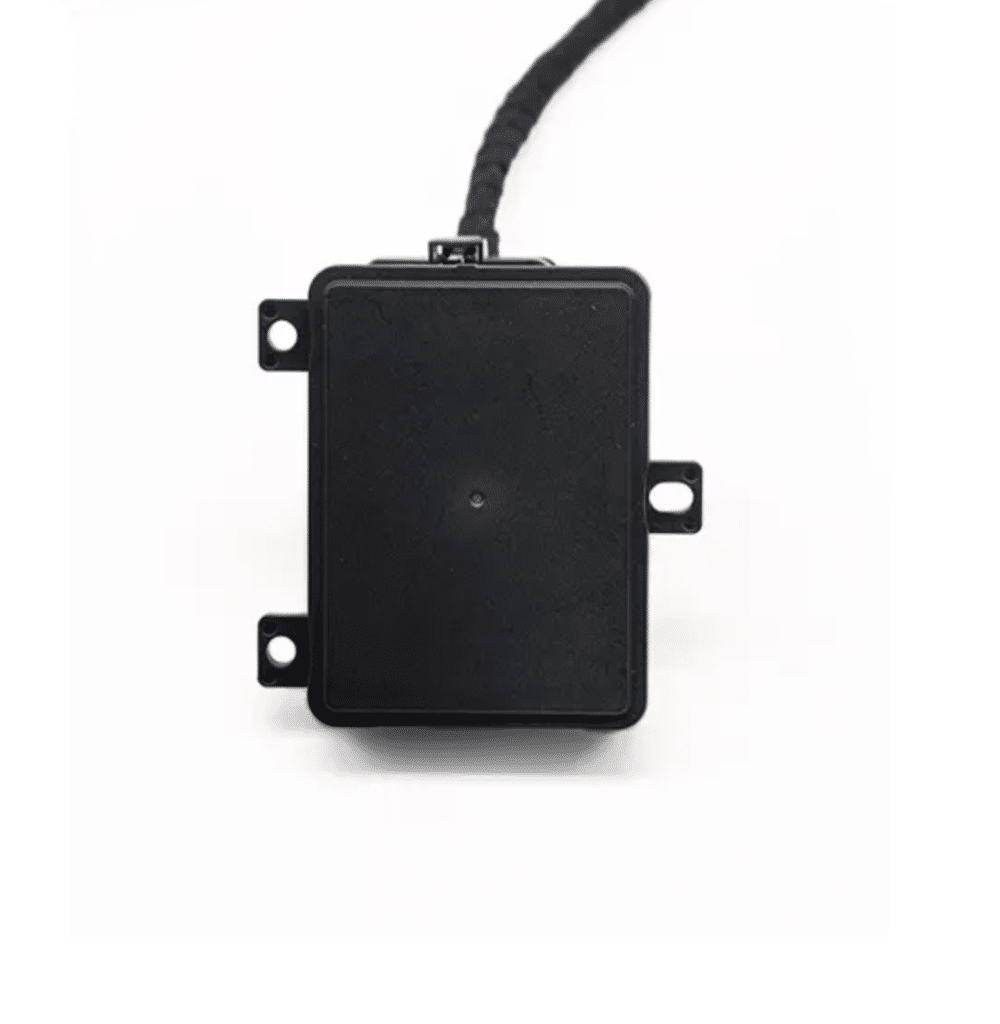
- Sub-Degree Angular Resolution: While legacy radars offer 4 to 5 degrees of angular resolution, modern 4D systems achieve sub-degree accuracy (often 0.5 to 1 degree). This allows the system to separate two pedestrians walking closely together at 150 meters.
- Digital Beamforming (DBF): Advanced baseband processors utilize DBF to steer the radar beam electronically. This creates a wider field of view (FOV) at close ranges for urban environments while maintaining long-range detection (up to 300+ meters) for highway driving.
- Rich Point Cloud Generation: Instead of returning a dozen data points per cycle, a 4D system generates tens of thousands of points per second, delivering rich spatial context regardless of fog, heavy rain, or blinding glare.
Euro NCAP Protocols as the Catalyst for Hardware Upgrades
The shift toward this advanced sensor technology is not solely driven by a desire for better features; it is a mandate dictated by global safety standards. The European New Car Assessment Programme (Euro NCAP) has continually tightened its testing protocols, establishing a baseline that legacy sensors cannot pass reliably.
Recent updates to the Euro NCAP roadmap place heavy emphasis on Vulnerable Road Users (VRUs). Scenarios such as a child running out from behind a parked car, a cyclist cutting across the vehicle’s path at an intersection, or automatic emergency braking (AEB) in pitch-black conditions require split-second, high-confidence object classification.
Because optical cameras degrade in low light or direct sun glare, and 3D radar cannot reliably classify the height and shape of the VRU, OEMs are forced into a corner. To achieve the coveted five-star safety rating in 2026 and beyond, the vehicle must maintain perception redundancy. 4D imaging radar provides this redundancy, offering the exact spatial and velocity data required by the vehicle’s central domain controller to trigger AEB systems without the risk of false positives (phantom braking).
| Feature | Legacy 3D Radar | 4D Imaging Radar | Euro NCAP Impact |
| VRU Detection | Poor (Often filtered out) | Excellent (High-res point cloud) | Critical for intersection AEB tests |
| Static Object Classification | Fails to distinguish bridges from cars | Identifies height and exact boundaries | Eliminates phantom braking at high speeds |
| Weather Resilience | High | High | Fulfills all-weather redundancy mandates |
| Resolution | Low (4-5 degrees) | Sub-Degree (< 1 degree) | Necessary for complex urban environments |
Architecting Sensor Fusion for L2+ and L3 Autonomy
Achieving L2+ (where the driver must be attentive but the car handles complex maneuvers) and L3 (conditional automation where the driver can disengage in specific scenarios) requires a robust sensor fusion architecture.
In a modern automotive design, no single sensor operates in a vacuum. The integration of 4D imaging radar profoundly impacts the broader Electronic Control Unit (ECU) topology.
Edge Processing vs. Centralized Compute
A significant architectural debate among Tier 1 suppliers and OEMs is where to process the massive influx of radar data. A standard 4D radar outputs Gigabit-level data streams.
- Smart Sensors (Edge Processing): The radar module contains a powerful integrated System-on-Chip (SoC) that processes the raw analog signals into a filtered point cloud before sending it over Automotive Ethernet to the central ADAS computer. This reduces the network load but increases the thermal output and cost of the radar module.
- Satellite Architecture (Centralized Compute): The radar acts merely as an antenna, streaming raw or semi-processed data directly to a massive central compute node (like those powered by advanced AI processors). This allows for deep, raw-level sensor fusion with camera data, known as “early fusion,” which drastically improves machine learning model accuracy.
By layering the rich point cloud from the radar over the high-resolution RGB data from the optical cameras, AI algorithms can construct a highly accurate, three-dimensional bounding box around hazards in real-time.
Hardware Design, Testing, and RF Engineering Challenges
Building a 4D imaging radar system introduces severe hardware engineering bottlenecks. B2B semiconductor and test-and-measurement companies are racing to provide solutions for these physical constraints.
1. Printed Circuit Board (PCB) Substrates:
Operating at the 77 GHz to 79 GHz frequency bands requires specialized PCB materials to minimize signal loss and manage impedance. Engineers rely on advanced laminates (such as Rogers RO3003 or specialized PTFE materials). The routing of high-frequency RF traces between the Monolithic Microwave Integrated Circuit (MMIC) and the antenna array demands microscopic precision during manufacturing.
2. Thermal Management:
Packing a multi-core Digital Signal Processor (DSP), hardware accelerators, and RF transceivers into a compact module behind a vehicle bumper creates extreme thermal density. If the silicon overheats, the signal-to-noise ratio degrades, compromising the radar’s accuracy. Advanced thermal interface materials (TIMs) and strategic heat-sink casing designs are mandatory.
3. Test and Validation:
Validating these sensors on the production line is a massive bottleneck. Test equipment must simulate complex, multi-target scenarios with varying Doppler shifts and elevations over-the-air (OTA) inside an anechoic chamber. Companies providing specialized radar target simulators (RTS) are vital, as OEMs cannot afford to test millions of miles physically to validate every edge case.
Market Trajectory and the Road Ahead
The financial data underscores the urgency. Industry analysts project the automotive radar market to scale massively, with the 4D segment specifically driving a Compound Annual Growth Rate (CAGR) exceeding 60% through the end of the decade.
Major semiconductor players are heavily entrenched in this arms race, transitioning to advanced CMOS nodes (like 28nm and 22nm FD-SOI) to pack more processing power into lower power envelopes. The shift from Frequency-Modulated Continuous-Wave (FMCW) to Phase-Modulated Continuous-Wave (PMCW) is also on the horizon, promising even better interference mitigation in dense traffic where hundreds of radars are operating simultaneously.
For Tier 1 suppliers and automotive engineers, mastering the hardware and software intricacies of 4D imaging radar is no longer optional. It is the definitive technological bridge required to navigate the harsh realities of Euro NCAP protocols and deliver the safe, redundant architecture required for the next era of autonomous driving.